The Real Reason Rush Orders Fail: You Skipped the 15-Minute Spec Check
· Elena Markovic
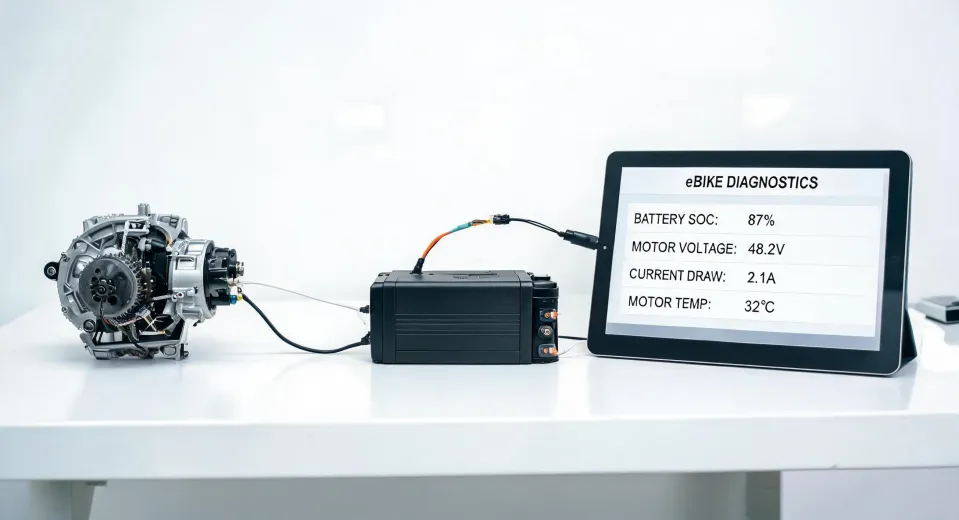
In my role coordinating emergency replacements at a motion control supplier, I've handled more than 200 rush orders over the past decade. Same-day turnarounds for assembly lines, after-hours shipments to medical device OEMs, e-bike shops that need a motor by tomorrow because a customer is about to leave for a tour. I remember the ones that didn't go well. Not one failed because the courier was slow. They failed because someone—sometimes me, sometimes the customer—moved too fast on the specs.
The biggest threat to an emergency order isn't logistics. It's not knowing exactly what you're ordering. I'd argue that the 15 minutes you spend checking a part number, a dimension, or a model code can save you three days, $300 in expedite fees, and the good relationship that drains away while a wrong part sits on a bench.
"Just send me a new Bosch e-bike motor. We'll figure it out when it gets here." I've had that exact sentence on the phone. It rarely ends well.
Why a rushed spec is the most expensive shortcut
Here's the thing about emergency orders: the clock only works in your favor if the first shipment is the right shipment. When you have 36 hours to get a line running—or a customer's bike back on the road—you don't have 36 hours to recover from a misfire. A wrong part means you eat the freight, you eat the extra courier cost, and you eat the next normal day of production. The decision to skip a spec check is a bet that the part is perfect. The odds are worse than people think.
Take a call from March 2024. A factory needed a replacement timing belt pulley for a packaging line that was down. Normal lead time for that particular part is four days. The client said they were in a hurry and could "just use the drawing." The drawing was two revisions stale. We spent ten minutes on the phone asking about tooth pitch and belt width, found the mismatch, and shipped the right pulley that evening. If we hadn't asked, the wrong part would have arrived, the line would have stayed down, and the client would have faced a $50,000 penalty clause from their own customer.
I don't have hard data on industry-wide mistake rates, but based on five years of our own order history, my sense is that somewhere between 8% and 12% of first-time rush orders have some kind of spec mismatch. That's not terrible until you remember how much is riding on each one.
Three parts that often look easier to order than they are
This is where customer education becomes part of my job. A well-informed customer asks better questions, and better questions turn a panic call into a calm, efficient one. Here are three examples that come up again and again.
Bosch E-Bike motors
Bosch e-bike drive units are modular, generator-controlled, and getting more advanced every season. But that also means the names are not interchangeable. The Active Line isn't the Performance Line. The Performance Line CX isn't the same as the Cargo Line. There are different mounting patterns, different connectors, and different software generations across model years.
I'm not going to quote exact Bosch e-bike motor warranty terms because they've changed across markets and over time. What I can say is: the warranty on a Bosch drive unit is tied to that unit's serial number, and most service work goes through authorized dealers. If you order a "new Bosch e-bike motor" without the model code, you're adding a connector and a bracket guess to an already urgent job. The serial number or the numeric model code from the motor case isn't optional trivia. It's the difference between a drop-in replacement and a paperweight.
NEMA 17 stepper motors
NEMA 17 gets treated as a full specification, and it isn't. The standard tells you the mounting face is 1.7 inches (43.2 mm) square. That's it. It doesn't tell you the shaft diameter (5 mm vs. 6.35 mm are both common), the body length (which relates to torque), the current rating, the step angle, whether it's a bipolar or unipolar winding, or if the leads are raw wires or a connector.
A client once ordered a NEMA 17 stepper motor for a pick-and-place arm and asked for next-day delivery. The part arrived on time, but the shaft was the wrong size for their timing belt pulley. The owner was furious—not at us, but at the ten minutes he could have spent measuring the old motor's shaft before calling. Instead, we did a same-day exchange, but the next-day window was gone. That's a $50 mistake that turns into a $300 emergency.
Timing belt pulleys and linear bearings
Timing belt pulleys might be the sneakiest category in the catalog. It's not enough to say "for a 15mm belt." You have to know the tooth profile. A GT2 2mm-pitch pulley and an HTD 5mm-pitch pulley can look nearly identical from the outside, but they are completely incompatible. I've had to ask, "Is it GT2 or HTD? How many teeth? Does the shaft have a keyway?" more times than I can count. Those questions aren't designed to slow you down. They're designed to make sure the pulley matches the belt and the motor shaft the first time.
Then there are the tiny parts that sound too simple to get wrong. When a customer asks "what size is lm8luu linear bearing?" they're already ahead of most people. LM8LUU is the long version of the standard LM8UU bearing, so the nominal dimensions are 8mm bore, 15mm outside diameter, and about 45mm long—not the 24mm length of the standard bearing. But you also need to confirm whether you need a flanged or cylindrical housing, and which tolerance class. I'm not 100% sure on the exact length without grabbing a catalog, so what do I do? I grab the catalog. That's the lesson.
The objection I hear at least once a week
"Fine, but when I'm in a rush, I don't have time to look that stuff up. I just order the first thing that looks right." I understand. I've done the same thing. What changed my mind was a run of expensive mistakes—not because we had bad customers, but because we didn't have a formal spec-check process for rush jobs. The third time it cost us real money, I finally created a small checklist: part number, dimensions, voltage, torque, speed, mounting, connection. Should have done it after the first time.
The math is simple. Reading a drawing or a datasheet takes fifteen minutes. Recovering from a wrong part takes at least two days, plus emergency freight, plus a second round of anxious emails. In my opinion, that fifteen minutes is the fastest part of the entire process.
And it's not just about being accurate. It's about being honest about uncertainty. If I don't know whether an LM8LUU is 24mm or 45mm long, I say so. If a customer isn't sure which Bosch e-bike motor they need, I ask them to find the model code instead of guessing. The informed customer isn't an inconvenience. They're the kind of customer I can help most consistently on a tight deadline.
So the next time you're ordering under pressure, take the pause. Look at the old part, read the numbers, ask the question. That pause is the most urgent thing you'll do all week.