Bosch E-Bike Motors and Motion Control: What a Quality Inspector Checks Before Buying
· Elena Markovic
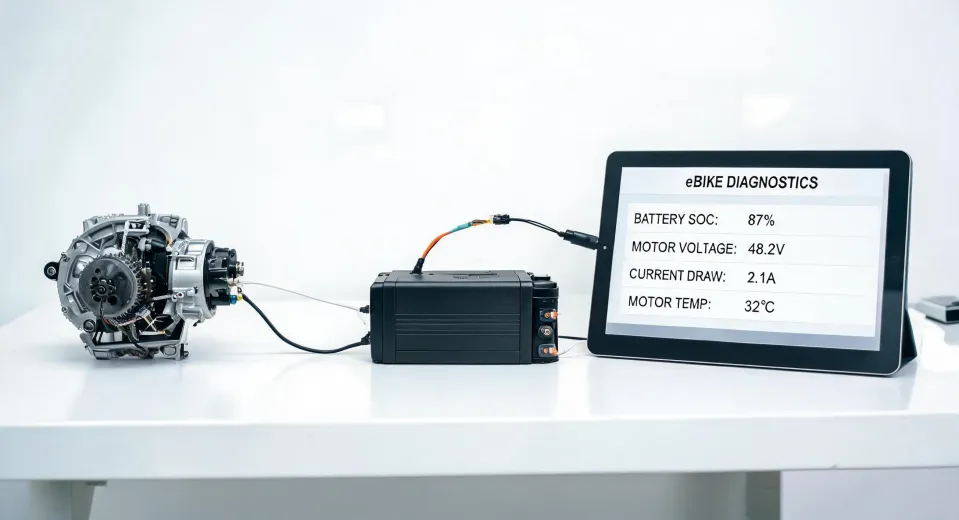
Stop comparing brand names and start comparing spec sheets. If you're buying a Bosch e-bike motor, a stepper driver, or a timing belt, the fastest way to avoid a costly mistake is to verify three things: exact specifications, supply chain stability, and after-sales support. That's not a slogan—it's what separates parts that last from parts that fail.
I'm a quality and brand compliance manager at a motion control company. Every deliverable that leaves our facility crosses my desk before it reaches a customer—roughly 200 unique items a year. In Q1 2024, I rejected 12% of first deliveries because of undocumented spec changes. This article is the checklist I wish every engineer, purchasing manager, and repair shop owner would use before buying.
Why Verification Beats Reputation
Brand reputation is a lagging indicator. By the time a brand earns a strong reputation, the market has already validated its products. That's useful, but it doesn't tell you whether the specific unit in front of you matches the specification you paid for. I've rejected premium-priced parts with visible tolerance issues, and I've approved low-cost parts that outperformed 'premium' alternatives. The difference always comes down to verification.
A batch of 500 'compatible' e-bike motors in March 2023 changed how I think about this. The torque sensors read 15% low against our spec. The vendor claimed it was 'within industry standard.' We rejected the batch, and the redo cost them roughly $22,000. Now every contract we sign includes explicit torque sensor calibration requirements.
I've lost count of how many 'industry standard' tolerances turned out to be much looser than our application could handle. The term sounds reassuring, but it has no legal meaning. Our internal standard is always stricter than the generic industry standard, and that gap is where quality problems hide.
What I Actually Check
The checklist changes by product category, but the core questions stay the same: Does the spec match the datasheet? Is the supply chain stable? Can you get support when it breaks? Here's how that plays out in three product categories I deal with daily.
Bosch E-Bike Drive Systems: More Than Just a Brand Name
Bosch e-bike drive systems are well-established in the market. When someone says 'I want a Bosch motor,' they usually mean one of the mid-drive Performance Line motors. But 'Bosch' alone isn't a specification. I check the exact model, firmware version, and torque sensor calibration. A motor from a reputable brand with outdated firmware is a support headache, not a badge of quality.
If you've been searching 'motor bosch ebike precio' (Spanish for 'Bosch e-bike motor price'), I get it—price differences between markets can be dramatic. But the cheapest listing usually means one of three things: old stock, no dealer support, or a grey-market import without warranty coverage. The initial price is a small fraction of the total cost of ownership when you factor in installation, downtime, and warranty risk.
Bosch CX-R E-Bike Motor: Specific Checks
The CX-R is the latest iteration in the high-torque mid-drive category. For B2B buyers, the important checks are motor mounting interface compatibility, software update capability, and the Ingress Protection (IP) rating for your environment. Torque specs are only useful if you verify them with a test rig—I've seen published torque curves that were, to put it mildly, optimistic.
One thing that surprises people: the motor's firmware version matters more than the hardware generation in some cases. Bosch has changed performance characteristics through software updates. If you're building a fleet of e-bikes, you need a supplier who can guarantee consistent firmware across all units.
Another thing many buyers miss: Bosch e-bike systems are heavily integrated with the battery, controller, and display. If you're replacing a motor in an existing bike, compatibility with the existing components is a bigger issue than the motor's standalone specs. The CX-R has a specific mounting pattern and electrical connector layout that won't work with older frame designs. 'It fits' is not enough—you need to verify the frame mount, chainline, and software compatibility.
The pricing for the CX-R varies a lot depending on where you source it. If you're comparing quotes, ask for the manufacturing date and firmware version in writing. We spec this in every purchase order now—after one supplier delivered a motor that had been sitting on a shelf for 18 months, with firmware that couldn't be updated.
What's a Stepper Motor? And Why the Driver Matters
If you're new to motion control: a stepper motor is a brushless DC motor that moves in discrete steps. It's used in CNC machines, 3D printers, and medical devices because it provides precise position control without expensive feedback encoders. The motor and driver are a system—choose the wrong driver, and even a high-quality motor will perform poorly.
Stepper motors have been around for decades, but the driver technology has changed a lot. A modern driver like the A4988 uses microstepping to divide each full step into smaller increments, which reduces vibration and noise. The tradeoff is that microstepping accuracy depends heavily on the current regulation in the driver. A poor-quality driver can make the motor position drift, especially at high microstep resolutions.
The A4988 stepper motor driver is inexpensive and widely available. But 'inexpensive' is a trap when you're buying components for a production application. I've tested A4988 clones where the current limit drifted by 30% once the driver reached operating temperature. In a $5,000 machine, a $2 driver can cause missed steps and ruin a production run. Verify the current-setting resistors and thermal protection before trusting it.
Another thing to check is the driver's maximum current rating versus the motor's rated current. I've seen people pair a 1.5 A motor with a driver rated for 2 A, assuming more is better. The opposite is true: an oversized driver can push too much current into a small motor and demagnetize the rotor. Match the driver to the motor, not to the biggest number in the catalog.
Columbus Timing Belt Replacement: Alignment Is Everything
When someone mentions Columbus timing belt replacement, the first thing they ask me about is belt material. I'm more concerned about pulley alignment and tension. A belt can look perfectly fine and still fail early if the pulleys are misaligned by 0.5 degrees. Use a straightedge or laser alignment tool, and follow the manufacturer's tension specifications.
Timing belts are consumables. If you're replacing a belt on a machine with a Columbus-brand drive, or a machine that originally came with a Columbus belt, the critical dimensions are pitch, width, and tooth profile. A belt that looks close but has the wrong pitch will cause noise, vibration, and premature failure. I've seen aftermarket belts that measure fine out of the package but stretch quickly under load. That's why we test over 1,000 hours in our lab before approving a new belt supplier.
Don't assume aftermarket belts match the original tooth profile just because the listing says compatible. Honestly, I'm not sure why some aftermarket belts get listed as Columbus-compatible when the tooth profile is visibly different. My best guess is SEO, not engineering.
Belt wear isn't always visible. A belt can look new and still have lost its tension retention due to heat or oil exposure. I recommend measuring belt tension with a frequency gauge—not just the 'push with your thumb' method. The frequency gauge gives you a number you can compare to the manufacturer's spec.
The Unsexy Part: Documentation and Compliance
Here's where I sound like a compliance nerd, but hear me out. If a vendor makes performance claims about a motor or driver, they should be able to show test data. Per FTC guidelines (ftc.gov), advertising claims must be truthful and substantiated. In my experience, vendors who can't provide data rarely have data to provide. 'Industry standard' is not a specification. Ask for the test report, the batch number, and the calibration certificate. That request alone will filter out a surprising number of suppliers.
Where This Advice Doesn't Apply
This checklist assumes you're buying components for professional use with maintainability requirements. If you're a hobbyist experimenting with a $10 stepper motor, the tradeoffs are different—you can afford to gamble, and you're probably learning by breaking things. If you're buying a complete e-bike from a local dealer, your focus should be on dealer service and battery compatibility, not component-level specs.
Also, this is based on what I've seen through Q1 2025. The e-bike and motion control space changes quickly—firmware updates, new motor generations, and supply chain shifts are constant. Verify current specifications and warranty policies before you commit.
If you take one thing from this, let it be this: the part that arrives is not the part on the datasheet until you verify it. Brand names open the door, but verification decides whether you'll stay in business.