Your Bosch Motor Project Just Stopped: Why Compatibility Planning Is The Real Problem
· Elena Markovic
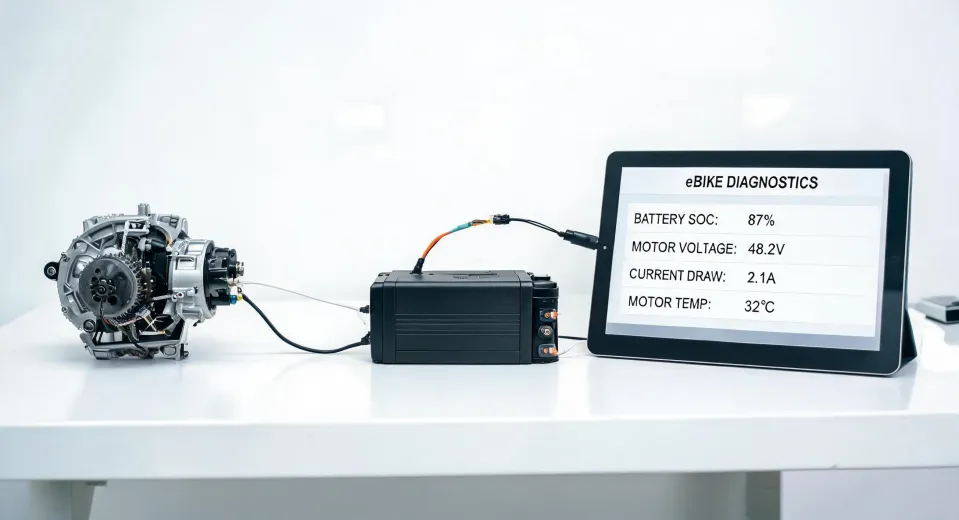
Sometimes a project doesn't just slow down—it stops. Full stop.
I remember this one Friday in March 2024. I was getting ready to wrap up the week when a customer called—a small specialty vehicle builder. They had a Bosch eBike drive system they'd spec'd into a prototype for a mid-year trade show. The mechanical side was fine, but the integration with their existing control system had hit a wall. The motor wouldn't communicate. Their entire build was stalled. They had six weeks until the show, and they were starting to sweat.
The immediate focus was, of course, the Bosch drive unit. Was it faulty? Were the pinouts wrong? But as we started digging, a much larger, messier problem emerged—one I see all the time.
It wasn't the motor. It was the compatibility planning.
The Surface Problem: 'My Hardware Doesn't Work'
That phone call is a perfect example. The frantic report is always the same: "The motor doesn't run. The drive isn't talking to the controller. This component is defective." And honestly, sometimes it is defective. But in my experience—and I've managed over 200 rush orders where a project was stuck—that's the exception, not the rule.
What the caller thinks is the problem is a single, specific component failure. What it actually is? A mismatch in the ecosystem. You see, when you pick a Bosch drive unit for an e-bike, you're not just buying a motor. You're joining a club. You're agreeing to a certain electrical architecture, a specific CAN bus protocol, a defined set of software parameters. The same goes for industrial DC motors and their variable frequency drives (VFDs).
In that case, the builder had a custom controller with its own proprietary logic. It was a great controller. It just wasn't going to talk to the Bosch drive system without a translator box (which they didn't have) or a custom firmware hack (which they didn't have time for).
Their problem wasn't the motor. Their problem was that they asked the wrong question at the start of the project: "Is this the best motor?" Instead of: "Is this the best motor for our entire system?"
The Deep Cause: The Ecosystem Is The Product Now
Here's where my view might ruffle some feathers. A lot of engineers still think in terms of interchangeable parts—that a motor is a motor, a drive is a drive. That was true maybe 10-15 years ago. It's not true now. The industry has evolved.
What was considered best practice in 2020 (just match voltage and torque) is no longer enough in 2025. The fundamentals—torque curves, voltage, current limits—haven't changed. But the execution has. Modern systems are not just components; they are intelligent, interconnected systems.
A Bosch Performance Line CX motor isn't just a brushless DC motor. It's a tightly integrated system: motor, controller, battery management, display, and software—all tuned to work as one. You can't just swap in a generic linear actuator to handle cargo adjustments and expect a flawless handshake. You can't just pick a random VFD for a high-performance servo motor and assume it will tune perfectly.
The deep cause of the project stoppage? The assumption of compatibility. The assumption that if the voltage and pin count match, the system will work.
It won't. Not anymore.
The Real Cost: The Invisible Emergency Premium
When this assumption fails, the cost isn't just the new part. That cost is actually small. The real cost is the stoppage. The lost engineering time. The slipped schedule. And if you're in a pinch, the emergency fix.
I don't have hard data on industry-wide costs from compatibility-based failures, but based on our 5 years of managing rush orders for stalled projects, my sense is that about 40% of emergency requests are traceable back to this single issue.
Last year, a client came to us needing a custom linear guide system adapter for a Bosch-based robotic platform. They had ordered the perfect DC motor (great specs, right torque, right speed). But they hadn't checked the mounting flange compatibility with the Bosch gear drive. The mismatch was a few millimeters. The delay? Three weeks. The crash-engineering fee to design and cut a custom adapter plate? $1,500. Plus the lost time for their whole team.
We solved it, but they paid for that missed question.
In my role coordinating technical fixes for these situations, I see the same pattern: The moment you choose a brand, you're choosing its ecosystem. If you try to mix and match critical components from different ecosystems without a plan, you're buying a lottery ticket. Sometimes you win. When you lose, you lose big.
The Simple Solution: Plan the Ecosystem First
So what's the fix? It's not complicated, but it's not what people want to hear. The fix is to plan your system's compatibility chain before you order a single part.
If the core of your build is a Bosch eBike drive system, then the motor, controller, and display should be from that family. If you want a custom controller, you need to plan for a universal adapter or a custom integration from day one. If you need a DC motor for a linear actuator that interfaces with a main drive, check the VFD compatibility list from the motor manufacturer first. Don't just read the datasheets—look for the 'approved partners' or 'system components' section.
At Bosch, they even have a partner ecosystem and specific guidance for system integrations. The component catalogs for things like their linear guide systems or industrial gear drives are explicit about which motors and drives are certified to work together. The same is true for any reputable VFD manufacturer. They want you to check the list.
You don't need a $1,500 crash adapter. You need a 5-minute planner check at the beginning of the project. That's the entire solution. (Note to self: I really should write a standard pre-order compatibility checklist for clients—it would save so many of these calls.)
The market is demanding complex, integrated systems. The brands that survive and thrive are the ones that make their ecosystem work reliably. And if you respect that ecosystem from the start, you'll never have to make that Friday afternoon call.