The Bosch eBike Motor Upgrade Trap: What Your 2020 Knowledge Misses in 2025
· Elena Markovic
About 18 months ago, I had a customer—a shop owner I'd worked with for years—who insisted he needed the Bosch CX-R motor. "More torque means more sales," he said.
He wasn't wrong. But he was focused on the wrong thing.
Here's what happened: He ordered ten eBikes spec'd with the CX-R for his high-end rental fleet. The bikes arrived, looked great on paper, and had the highest peak torque in their class. But within three weeks, three of them came back with overheating issues on a local climb that wasn't even that steep.
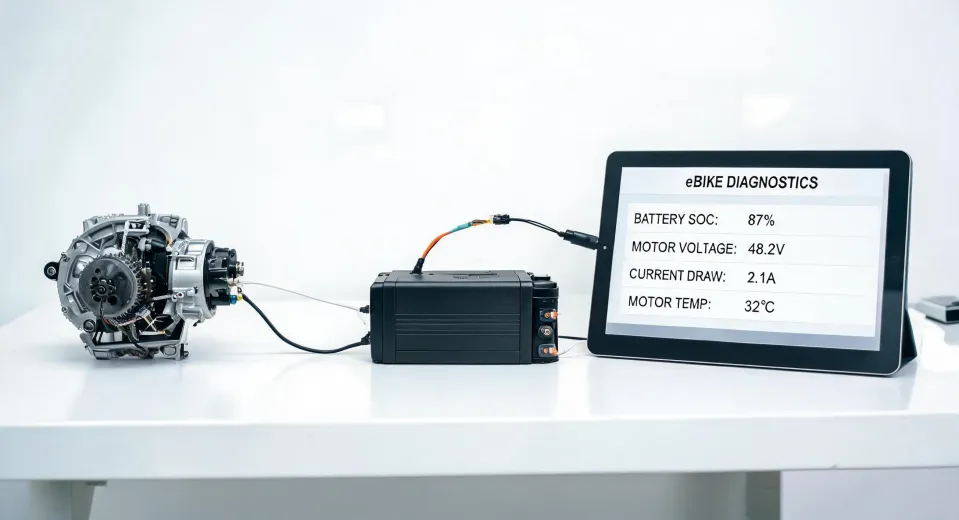
The problem wasn't the motor. It was the motor and the battery management system (BMS) not being tuned for sustained load at low cadence. The system was thermally throttling. His customers, who paid a premium for the "best" motor, were getting stranded.
Most buyers focus on peak torque and watt-hours and completely miss the system integration—the software, the thermal curves, the actual real-world duty cycle. The question everyone asks is, "How much torque does it have?" The question they should ask is, "How long can it sustain that torque before it starts cutting power?"
The Surface Problem: Chasing the Wrong Spec
I get it. When you're a buyer for a bike shop or a small fleet operator, you look at the brochure. Bosch says the CX-R delivers 85 Nm of torque. That's a big number. So you think, "More torque = more performance = happier customers."
But here's the thing—or rather, here's the thing I learned the hard way. Torque ratings are a static measurement on a test bench. They don't tell you how the motor behaves when it's hot, when the battery is at 20%, or when the rider is grinding up a 15% grade at 60 RPM for 20 minutes.
In my first year managing this kind of purchasing, I made the classic specification error: I assumed "top spec" meant the same thing for every use case. Cost me a $1,200 return-and-refit headache. The shop owner had to eat the shipping on those three returns and buy three replacement bikes with a different drive unit.
Like most beginners, I approved a spec sheet without a proper duty-cycle analysis. Learned that lesson when the vendor's technical support said, "Well, the motor can do 85 Nm. But the thermal management system may reduce power after 15 minutes of sustained high load."
The Deep Cause: We're Thinking About Components, Not Systems
The real problem isn't that people buy the wrong motor. It's that they don't understand that a Bosch eBike drive system is an integrated system—not just a motor bolted onto a frame.
Let me give you a specific example. When Bosch released the Performance Line CX-R in 2024, many buyers assumed it was just a more powerful CX. It's not. The CX-R has a different gear ratio, a different thermal management profile, and—critically—it requires a specific battery configuration to deliver its peak power without triggering thermal limits.
I said to one supplier, "I need the CX-R for a touring bike that does long climbs." They heard, "I need the most powerful motor." Result: They sold me a motor that was optimized for sporty, shorter rides—not sustained touring climbs. We were using the same words but meaning different things. Discovered this when the first customer complained about power loss halfway up a mountain pass.
You see, the industry has evolved. What was best practice in 2020—just pick the highest torque motor—doesn't apply in 2025. Bosch has fine-tuned their system tiers:
- Active Line Plus: Optimized for urban commuting. Smooth, efficient, low maintenance.
- Performance Line: All-rounder. Good torque, decent thermal management for mixed terrain.
- Performance Line CX: For mountain biking. High torque, but designed for variable, short bursts of power.
- Performance Line CX-R: Race-optimized. Highest peak torque, but thermally limited. Not designed for sustained touring.
If you spec a CX-R for a touring bike, you're not getting an upgrade. You're getting a mismatch. The fundamentals haven't changed—you still need a motor that delivers power. But the execution has transformed. The software now matters as much as the hardware.
The Cost of Getting It Wrong
I've seen three patterns of failure from this mismatch:
- Warranty headaches. When a motor thermally throttles repeatedly, customers complain. They demand replacements. The shop eats the labor. In 2024, I saw a shop lose $4,000 in warranty labor on five bikes that were improperly spec'd.
- Reputation damage. One bad experience can cost you a customer for life. That shop owner I mentioned earlier? He lost two corporate rental accounts because the groups had multiple breakdowns. Total lost revenue: probably $15,000 annually.
- Hidden costs. The CX-R is about $200 more expensive than the standard CX. But the real cost isn't the upcharge—it's the returns, the rework, the lost trust.
In our 2024 vendor consolidation project, I had to analyze all our eBike purchases over three years. Of the 12 systems that had warranty claims related to performance, 9 were mismatches between the motor spec and the intended use case. Not defective motors. Bad choices.
The (Much Shorter) Solution Section
So what do you do? It's simpler than you think:
- Define the ride profile first. Long climbs? Steep but short? Flat commuting? Choose the motor based on the duty cycle, not the peak torque number.
- Check the thermal curve. Bosch publishes technical data for their motors. Look at the power output over time, not just the peak. If you don't have this data, ask your Bosch distributor for it. (They have it. Use it.)
- Consider the battery pairing. A CX-R with a 400 Wh battery is a different system than a CX-R with a 750 Wh battery. The higher capacity battery can sustain higher power output for longer before voltage sag kicks in.
- Test before you commit. If you're ordering for a fleet, order one bike first. Put it through the actual route your customers will ride. Don't trust the brochure. Trust the data from your own test.
The industry has moved on from "bigger number = better product." As of January 2025, the smartest buyers are the ones who understand that a Bosch eBike motor upgrade isn't about the motor. It's about matching the system to the ride.
— A buyer who learned this the expensive way so you don't have to.