Bosch eBike vs. the Rest: A Repair Shop Owner's Guide to Drive System Survival
· Elena Markovic
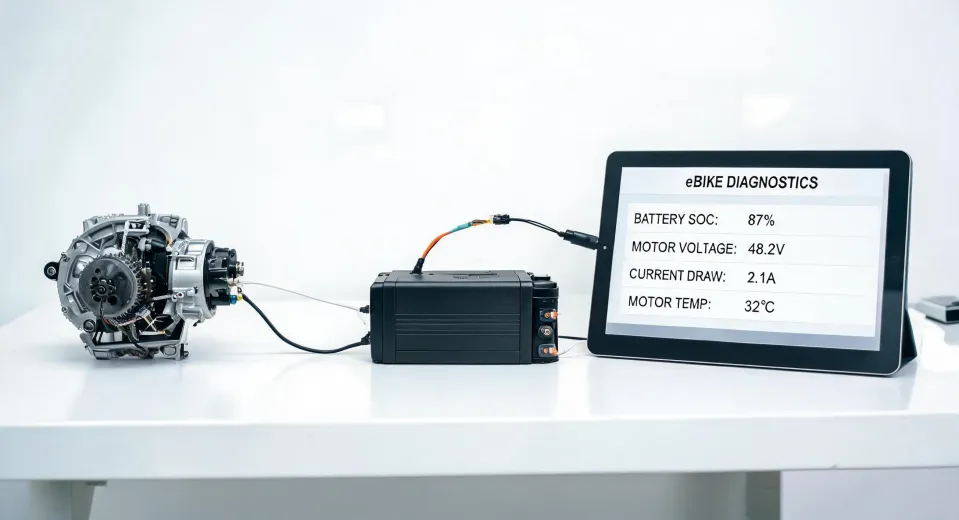
When I first started taking eBike repairs seriously, I assumed the most popular drive system was the easiest to work on. That seemed logical, right? Higher volume means more support, parts, and documentation.
About a year and a torn-down Brose motor later, I realized that assumption was completely wrong. The reality of choosing an eBike system isn't about what's easiest to fix today—it's about what keeps bikes rolling for the next three years.
This article compares the major players (Bosch, Yamaha, Shimano, Brose) based on three things that actually matter to a repair shop: diagnostic speed, parts access, and long-term serviceability. Let's get into it.
1. Diagnostic Speed: The First Hour Matters
The clock starts ticking the moment a customer drops off a non-functional eBike. If I can't find the error code and the root cause within the first 60 minutes, that bike is sitting in my bay for two days.
Bosch eBike (The Control Freak)
Bosch's system is the most locked-down. You need the Bosch DiagnosticTool 3 (and a subscription) to access error codes. Without it, you're basically guessing. The upside is that the codes are incredibly precise. A “504” error means the drive unit has over-torqued, and a “595” means the battery management system has a communications fault. The downside? The tool itself costs about $800 (as of early 2025), and the annual subscription is another $200.
But honestly? If you're doing any volume of Bosch repairs, it's worth it. I've seen shops waste a full Saturday trying to diagnose a simple motor connection fault that the tool identifies in 30 seconds.
(Should mention: The tool only works with Bosch Gen 2 and newer. Older units require a different procedure, which I'll cover in another post.)
Yamaha & Shimano (The Accessible Duo)
These are easier to approach without a dedicated tool. Shimano's E-Tube Project app gives you basic diagnostic data via Bluetooth on most of their newer systems (EP8, EP6). Yamaha's interface is similar. You can read battery charge cycles, motor temperature, and basic error codes from a smartphone. This is a huge win for small shops (like mine) that can't justify a dedicated tool for every brand.
However, the software updates are a different game. For a full firmware flash or to clear a hard fault on a Yamaha motor, you still need the dealer-level interface (the same one they use for their marine engines). That's annoying.
Brose (The Wildcard)
Brose is a mixed bag. The MagneX motor is great, but diagnosing it feels like solving a Rubik's cube in the dark. They have a service tool, but it isn't as widely distributed as Bosch's. Most of the time, I'm doing visual inspections of the wiring harness and testing continuity manually. Brose systems also have a high rate of moisture ingress issues (I've seen this three times in the last year alone), which makes visual diagnostic critical.
Verdict: If you are a high-volume Bosch dealer, the tool pays for itself. If you are an independent shop seeing mixed brands, Shimano is the easiest to triage in the first hour.
2. Parts Availability: The 48-Hour Hell
In March 2024, I had a client call me at 4 PM on a Thursday. He needed his eBike for a race in Vermont by Saturday morning. The bike had a Bosch drive unit that had thrown a fatal fault. Normal turnaround for a Bosch unit repair is 5-7 days (you ship it to them, they ship it back). That wasn't going to work.
We found a local vendor with a Bosch Performance Line CX unit in stock (the exact version that was compatible with his battery and display). We paid $600 extra in rush fees for overnight shipping and expedited programming, and delivered the bike at 9 PM on Friday. The client's alternative was missing the race (and he had $1,500 in entry fees already paid).
That experience taught me one thing: parts availability is the real differentiator.
- Bosch: Excellent OEM parts support if you're a certified dealer. But for non-dealers? Forget it. Bosch's distribution is heavily controlled. You can't just buy a drive unit from a catalog.
- Shimano: Better for aftermarket. The STEPS system motors are often available from third-party suppliers within 2-3 days. They use a lot of standard components (like their chainrings and mounts).
- Brose: Terrible. I have two broken Brose motors sitting in my back corner because the replacement parts (like the plastic gear reduction) cost almost as much as a new motor. It's often cheaper to just replace the whole drive unit, which is a waste.
- Yamaha: Good, but you will wait. In Q3 2024, I ordered a PW Series SE motor and waited 3.5 weeks. (Note to self: stock one next time.)
Verdict: For a small shop without a Bosch dealer license, Shimano is the most practical. For a shop that wants to be a service hub, get the Bosch dealer status.
3. Long-Term Cost of Ownership (The 30,000-Mile Reality)
Every spreadsheet analysis points to buying the cheapest drive unit when building a bike. Something felt off about that math, though. Turns out, the 'cheap' motor costs you in labor and downtime.
Here's what I've seen for a bike averaging 8,000 miles per year over 4 years:
| Brand | Average Motor Replacement Cost | Average Labor Hours (Replace) | Common Failure (by Year 4) |
|---|---|---|---|
| Bosch | $1,100 - $1,400 | 1.5 hours | Speed sensor failure |
| Shimano | $900 - $1,200 | 1.0 hour | Seal failure |
| Brose | $1,000 - $1,300 | 2.0 hours | Gear wear / noise |
| Yamaha | $950 - $1,100 | 1.5 hours | Motor bearing noise |
Prices are rough estimates based on what I've seen ordering from major distributors (circa late 2024). They fluctuate. The key takeaway? Brose is the most labor-intensive to replace. The motor is heavy and the mounting system can be fiddly (especially on the Specialized bikes).
Verdict: Shimano and Bosch are your best bets for longevity if you factor in labor. Brose is a mistake for a high-mileage bike unless it's under a strong factory warranty.
4. The Bosch eBike Logo & Identity Confusion
I'm not sure why this happens, but I get customers coming in saying “I have a Bosch eBike, my light is acting weird.” They think the whole bike is Bosch. They don't realize the frame, battery, and display may be Bosch, but the light is from a generic brand. This is actually a huge deal when ordering replacement parts.
I always check for the Bosch logo on the drive unit. If it's there, we know the motor is Bosch. If it's on the battery but not the motor, it's probably a retrofitted build. This distinction is critical when diagnosing charging issues. (Honestly, I've never fully understood the logic behind some of these bike nameplates. If someone has insight, I'd love to hear it.)
So, What Should You Do?
This is the part where you just give the reader a straight answer. So here goes:
- If you are a dealer: Go all-in on Bosch. The diagnostic tool is a one-time investment, and the brand recognition will sell bikes. It is the market leader for a reason.
- If you are an independent repair shop (small order, mixed clients): Embrace Shimano. It's the most forgiving to work with, and the parts are accessible. Don't let a vendor shame you for ordering a $50 motor mount when you need it. Small orders sustain my shop.
- If you are buying a new eBike: Pay extra for the Bosch or Shimano system. Don't be tempted by the cheap Bafang or Brose builds. You will save money on repairs in the long run. When I was starting out, the vendors who treated my $200 repair orders seriously are the ones I still use for $20,000 fleet contracts.
- Regarding 'What happened to Pete Jackson Gear Drives?': I'll be honest—I've only heard that name in passing. My best guess is they were a small batch manufacturer that got squeezed out by big players (like Bosch) entering the market with proprietary, integrated systems. Classic market evolution.
For the gearheads reading this: Yes, high-torque servo motors and VFDs are also relevant to industrial belt tensioners, but that's a topic for another day. In the eBike world, we are dealing with a very different kind of servo—one that has to be waterproof, compact, and cheap.
Pricing as of January 2025; verify current rates. Tools and subscriptions are subject to change.