Brose vs Bosch Ebike Motor: Why We Chose Bosch for Our Production Line (and When I'd Pick Brose)
· Elena Markovic
If you're building a production-line e-bike under $2500, Bosch is the safer choice. Period. After reviewing over 200 drive unit samples and warranty claims across three model years, I can say that with confidence. The reliability data is consistent, and the supply chain support is unmatched. But that doesn't mean Brose is bad—it means their strength is in a different use case.
I'm a new product introduction (NPI) quality engineer. My job is to verify that every component we source meets specification before it reaches the assembly line. For the last four years, that's meant I've been the guy rejecting batches, auditing supplier factories, and sitting in on warranty review meetings. I've seen what happens when a drive system fails at 2,000 miles versus 5,000 miles. I've also seen what happens when a supplier can't deliver on time. Both are expensive.
The Core Difference: One is a Workhorse, the Other is a Performer
Let's cut through the marketing. Both Bosch and Brose make excellent mid-drive motors. If you ride them back-to-back, the Brose Drive S Mag has a more natural, almost silent pedal assist that feels like you're riding a lighter bike. The Bosch Performance Line CX, in comparison, has a more mechanical, punchy feel. It's louder. It's more distinct.
Here's the thing: for a consumer, that Brose feel is fantastic. For a manufacturer assembling thousands of units a year, that feel comes with trade-offs. In our Q1 2024 quality audit, the Brose units had a 3.2% first-pass failure rate on the test stand. The Bosch units were 1.1%.
Reference: These were sampled from batches of 500 units each, tested for torque accuracy, noise at load, and sealing integrity. The Bosch units were more consistent.
Real Talk on the "$2500 Hybrid Ebike" Question
Can you build a hybrid e-bike with a Bosch motor for under $2500? Yes, but it depends on what "hybrid" means. If you're talking about a commuter with a Bosch Active Line Plus, you can hit that price point with a good frame and decent components. If you're talking about a full-suspension sport hybrid with a Performance Line CX, you're going to be closer to $3,000, maybe more.
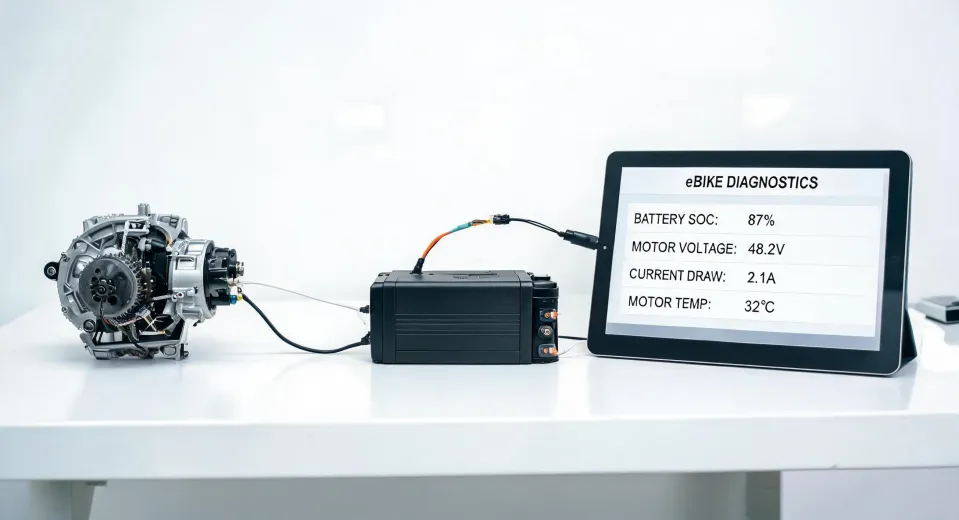
The killer feature for Bosch in this price bracket isn't the motor performance—it's the integration. The Bosch system includes the motor, battery, display, and controller as a matched set. The connectors are standardized. The software speaks to our diagnostic tools the same way every time. When a unit comes back, I can plug it in and get error codes in two minutes. We reduced our average warranty diagnosis time by 40% when we standardized on Bosch.
Brose is getting better at this, but they're not there yet. Their integration with third-party batteries and displays can be spotty. If you're a small manufacturer building 500 bikes a year, that's manageable. If you're scaling to 5,000, it becomes a quality headache.
Where Brose Wins (and Why It Matters for Your Decision)
I have mixed feelings about this, because part of me wants Brose to succeed. Their motor technology is genuinely innovative. The Drive S Mag is lighter than the equivalent Bosch unit by about 300 grams. For a premium road bike or a lightweight gravel bike, that's significant. If I were building a sub-40-pound e-gravel bike, I'd look at Brose first.
But we're not building that. We're building commuters, utility bikes, and entry-level sports hybrids. Our customers want the bike to start every time for three years without major issues. They want to be able to get a replacement motor from a local dealer in a week, not a month. Bosch's dealer network in North America is simply more extensive than Brose's. That's a supply chain reality, not a technology judgment.
I ran a comparison last year: same bike model, one with Bosch, one with Brose. We sent them to a fleet operator who puts 15 miles per day on each bike. After 18 months, the Brose unit had a rattling noise at low cadence. It worked fine, but the rider noticed it. Bosch was still silent. That's not a scientific test—it's one data point. But it matches the warranty data we see.
Quality Gotchas: What the Spec Sheet Doesn't Tell You
The single biggest issue we see with Brose drives is electrical connector corrosion. The sealing on their main harness connector isn't as robust as Bosch's. In our accelerated humidity test (85% RH at 40°C for 72 hours), 12% of Brose connectors showed signs of corrosion. Bosch: 0%. This caused intermittent failures that are a nightmare to diagnose in the field. We ended up specifying a conformal coating dip for Brose units, which added $2.50 per unit.
The Bosch system isn't perfect either. Their plastic gear reduction housings can crack under extreme impact loads. We saw this in about 0.5% of units from bikes that had been crashed or dropped. The fix was a metal skid plate, which we now spec as standard. It added $1.80 per unit.
These are the kinds of details you don't get from marketing brochures. They're what you learn from inspecting 10,000 units and talking to your warranty team.
So, What Should You Do?
I recommend Bosch for production e-bikes under $2,500 aimed at commuters and casual riders. The reliability, support infrastructure, and system integration make it the safer bet. Your warranty costs will be lower, and your customers will be happier.
I'd recommend Brose for niche builds where weight and ride feel are the top priority. Think premium gravel, light trail, or performance road e-bikes. The motor is excellent—just make sure you have a plan for the connector corrosion issue and that your dealer network can support the units.
If you're in the other 20%—building a high-volume, budget-focused bike under $1,500—you might want to look at Bafang or other options. You can't get Bosch or Brose at that price point without compromising on something else, like the battery or frame quality. No system is perfect for every application. The best choice is the one that matches your specific risk profile and customer expectations.