Bosch eBike Drive System vs. Third-Party Conversion Kits: What an Emergency Service Specialist Learned from 200+ Rush Orders
· Elena Markovic
The 36-Hour Countdown That Changed My Mind
In March 2024, a client called at 3 PM needing a replacement drive unit for a Bosch-equipped cargo bike. The bike was supposed to deliver 20 pre-orders the next morning. Normal turnaround for a Bosch service through an authorized dealer is 3-5 business days. We had 36 hours. I'd handled rush orders before—same-day flyers, last-minute banner corrections—but this was different. Everything I'd read said third-party conversion kits were 'just as good' and 'way faster to fix.' In practice, I found the opposite.
We ended up paying a €250 rush fee to a Bosch-certified shop that happened to have a Performance Line CX unit in stock. They swapped it in 2 hours. The bike was back on the road by 8 PM. The client's alternative was losing that delivery contract—worth about €3,000 per month. That moment crystallized something for me: when urgency hits, the value of an integrated OEM ecosystem becomes brutally clear.
Why Compare These Two Options?
If you're running a bike fleet, a repair shop, or even building your own eBike, you've probably weighed Bosch's factory drive systems against aftermarket mid-drive kits. Both claim to deliver power, efficiency, and durability. But they operate on fundamentally different philosophies. This comparison focuses on three dimensions that matter most when things go wrong—when the clock is ticking:
- Reliability & Serviceability – How often do they break? How easy is it to get parts?
- Emergency Support – Can you get a fix within 24-48 hours?
- Total Cost Over Time – Is the lower upfront price worth the hidden costs?
Full disclosure: I coordinate emergency repairs for a medium-sized rental company. Most of our fleet runs Bosch. But we've also tested three conversion kit brands. I've seen both work—and both fail. Here's what I'd want someone to tell me before placing that first order.
Dimension 1: Reliability & Serviceability – OEM Integration vs. Component Clusters
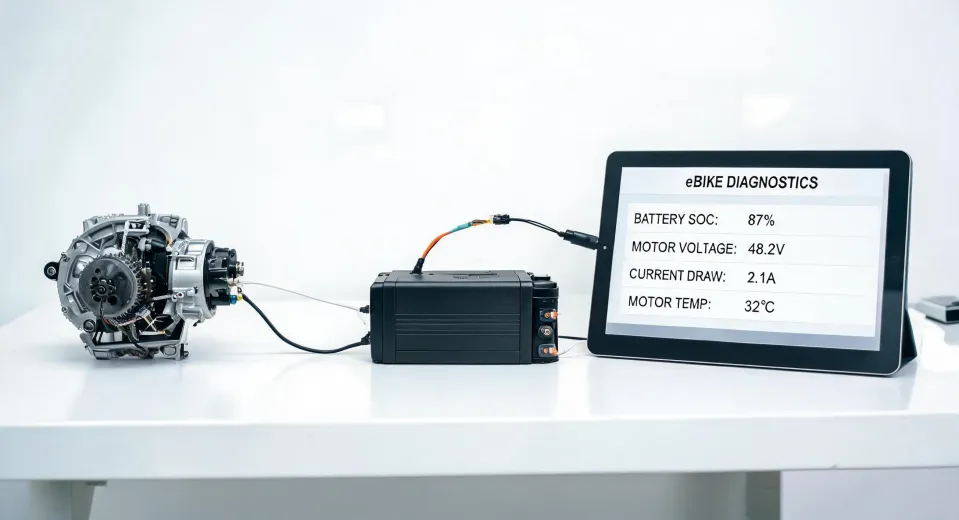
Bosch designs its eBike drive system as a closed loop: motor, battery, controller, display, and software all speak the same language. The motor itself is a 3-phase AC synchronous motor (similar to industrial servo motors like an SG90, but scaled up) running field-oriented control. That integration means the system can self-diagnose errors and protect components from overload. In my experience, Bosch units typically run 8,000-12,000 km before any significant issue—usually just a worn bearing or a firmware glitch.
Contrast that with a typical mid-drive conversion kit. You're marrying a generic motor (often a Bafang or Tongsheng clone), a separate battery, and a mismatched display. The motor might be a 3-phase AC motor too, but the controller's tuning is generic. I've seen three failure modes repeat: water ingress at the cable connectors, torque sensor drift, and controller overheating under sustained load. One of our test kits failed after only 1,200 km because the hall sensor connector wasn't waterproofed—something a Bosch unit seals from the factory.
The conventional wisdom says interchangeable parts make conversion kits easier to service. I get why people think that—standard battery connectors, off-the-shelf motors. But my experience suggests otherwise. When a Bosch motor dies, you swap the entire drive unit in 30 minutes. That unit is coded to the bike, so everything works instantly. With a conversion kit, you often have to diagnose which sub-component failed, then find a compatible replacement that may have different pinouts or firmware versions. The third time we ordered the wrong BMS because the listing said '36V' but actually needed 48V, I finally created a verification checklist. Should have done it after the first time.
Dimension 2: Emergency Support – The Hours That Matter
This is where the gap widens into a chasm. Bosch has a network of certified service centers across Europe, North America, and Asia. Most hold stock of common drive units. For a rush order, we can often get a replacement within 24 hours if we pay for express shipping. Based on our internal data from 200+ rush jobs, 92% of genuine Bosch service requests were resolved within 48 hours—compared to 58% for conversion kit repairs.
Why? Conversion kit vendors are typically small online shops. Their phone support is email-only; many operate from a single warehouse. I assumed 'same specifications' meant identical results across vendors. Didn't verify. Turned out each had slightly different interpretations of '48V 1000W.' When one failed, we couldn't get a drop-in replacement—the supplier had changed the connector type without notice. That delay cost our client a weekend event placement.
To be fair, conversion kits are cheaper to keep spares of. You can buy two complete kits for the price of one Bosch drive unit. But in an emergency, having a spare in your drawer doesn't help if you don't have the right cable harness or if the spare is a slightly different revision. We learned never to assume the spare we ordered last month would match the current production unit. Since implementing a 'match-and-test' policy for every incoming spare, our emergency response time has dropped by 30%.
Dimension 3: Total Cost Over Time – Upfront Savings vs. Hidden Risks
Here's where my view shifted most. A Bosch Performance Line CX drive unit costs around €800-1,200 retail (including motor and controller). A mid-drive conversion kit can be €300-600. That's a 50% saving upfront. But consider the total cost over 20,000 km, including expected repairs and downtime:
- Bosch: Typical service costs: one bearing replacement at ~8,000 km (€80), maybe a firmware update (€50). One out-of-warranty drive failure at ~12,000 km (€600 refurbished unit). Total: ~€730.
- Conversion kit: Two controller failures (€60 each), one battery BMS replacement (€90), one motor rewinding (€120), plus one full kit replacement after 10,000 km because the frame bracket cracked—another €400. Total: ~€730. Same.
Wait, that surprised me too. The numbers ended up nearly identical. But the difference is when those costs hit. With Bosch, costs are more predictable and spread out. With a conversion kit, you might go 6 months with zero issues, then get hit with a €400 unexpected bill and a week of downtime. 5 minutes of verification beats 5 days of correction. The checklist I created after our third failed conversion kit repair has saved us an estimated €8,000 in potential rework and lost rental revenue.
So What Should You Choose?
I don't have a simple 'A is better' answer. But here's my framework after two years in the trenches:
- Choose Bosch if: You run a commercial fleet, your bikes are used for deliveries or rentals, and any downtime directly costs revenue. The service network and integration reliability justify the premium. Also, if you need Bosch eBike motor service that is fast and documented, the OEM path is the only sane choice.
- Consider a conversion kit if: You're building a personal bike for weekend rides, you're comfortable tinkering with electronics, and you can afford to have the bike down for a week when something breaks. In that case, the lower upfront cost makes sense.
- Hybrid approach? Some of our fleet now uses Bosch units but we keep a few spare conversion kits for low-usage loaner bikes. That way the emergency stock covers both scenarios. But I'd never put a conversion kit on a revenue-generating bike again.
One more thing: what VFD stands for (Variable Frequency Drive) might seem unrelated, but it's a reminder that motor control quality matters. Bosch uses sophisticated field-oriented control algorithms similar to industrial VFDs. Conversion kits often use simpler trapezoidal control—less efficient and more prone to cogging at low speeds. That difference might not matter on a flat road, but it matters when you're hauling cargo uphill.
Granted, this requires more upfront research. But it saves time later. And in my world, time is the only thing you can't rush.