Best Bosch E-Bike Motor? And Other Questions I Answer When You're on the Clock
· Elena Markovic
-
What’s the best Bosch e-bike motor?
-
How do I know if the Bosch e-bike speed sensor is bad?
-
Can I use a VFD on a single phase induction motor?
-
What is a VFD, in plain language?
-
What is a wet timing belt?
-
Why does my Bosch e-bike motor cut out under load?
-
When is a rush order actually worth the money?
I coordinate the urgent parts and service side of a driveline distribution business. We sell and repair Bosch e-bike drive systems, but we also handle industrial servo motors, AC motors, VFDs, and timing belts. When a shop or a plant calls with “we need this running by Friday,” I’m the one deciding what gets expedited and what waits. Last quarter alone, we processed 47 rush orders with 95% on-time delivery. The 5% we missed? Almost always because someone tried to save money on the last step.
These are the questions I actually answer when you’re on the clock.
What’s the best Bosch e-bike motor?
“Best” is a dangerous word. For a dealer selling recreational trail bikes, the Performance Line CX is often the default. According to Bosch eBike Systems (bosch-ebike.com) as of January 2025, the CX is rated at 85 Nm of torque and up to 340% assistance. But if I’m ordering a motor for a cargo delivery fleet, the CX is not the best—the Cargo Line is. It is tuned for lower speed and heavier loads. I’ve seen a CX overheat on a heavy cargo bike because the buyer picked the sportier spec. (mental note: ask about payload before recommending anything.) The best Bosch e-bike motor is the one matched to the bike, rider, and duty cycle. In a rush, the spec sheet is still the fastest filter. Just don’t stop at the torque number.
How do I know if the Bosch e-bike speed sensor is bad?
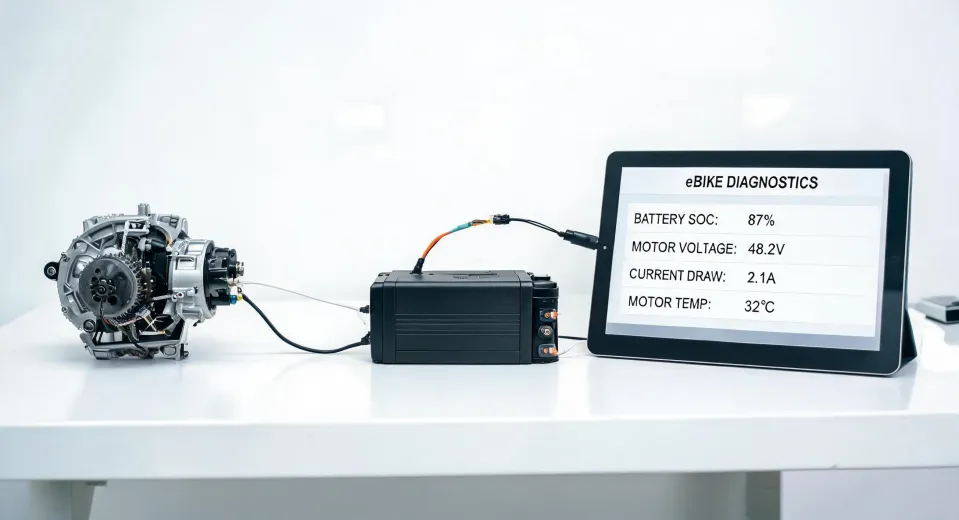
If the motor cuts out, surges, or shows a drivetrain error, check the speed sensor before you order a motor. The system uses a small magnet mounted on the wheel and a pickup on the frame. If the controller doesn’t get that signal, it backs off assist. The June 2023 batch of warranty returns changed how I think about this. Six dealers shipped “dead” motors back to us. All six had a broken speed sensor wire. We paid the labor, apologized, and replaced working motors. Since then, the sensor is step one in every no-assist diagnosis.
One more thing: I told a dealer “check the sensor.” They heard “you need a new sensor.” They ordered a new sensor, installed it, and the bike still showed a fault. The actual problem was a damaged wire, not the pickup. We were using the same words but meaning different things. When the clock is ticking, a speed sensor diagnosis saves hours. A new motor won’t fix a broken wire.
Can I use a VFD on a single phase induction motor?
Short answer: usually no, not if you need real variable speed. A conventional single phase induction motor uses a start winding, capacitor, and often a centrifugal switch. Those parts are tuned for fixed mains frequency. Feed the motor 30 Hz from a VFD, and the capacitor reactance shifts, the switch can chatter, and the motor runs hot. It can be done with purpose-built single-phase motor drives, but those are not your standard three-phase-output VFD. If the application needs variable speed, the clean path is a three-phase motor plus a VFD.
I know that sounds like a component buyer’s answer, but it’s also a money answer. Forcing a VFD onto a cheap single-phase motor usually ends in one call to us: “the motor burned up.” The customer saves nothing. If you only need a soft start, look at a soft starter, not a VFD. That’s it.
What is a VFD, in plain language?
A variable frequency drive—VFD—is a motor controller that changes the frequency and voltage going to an AC motor. That changes motor speed. A 60 Hz fan motor becomes a 30 Hz fan motor. The drive doesn’t lower speed just by reducing voltage, because that kills torque. It adjusts the frequency and voltage together, which keeps the motor usable over a wide speed range.
Most VFDs also protect the motor from overload and handle inrush current on startup. They’re common on pumps, fans, conveyors, and machine spindles. In a rush repair, a VFD can sometimes replace a worn-out starter and add protection the original never had. But don’t buy one just because the old part is scarce. Buy it because you need speed control or ramped starting. Otherwise you’re paying for features you’ll never use.
What is a wet timing belt?
A wet timing belt is a toothed belt that runs inside an oil-filled housing instead of under a dry cover. The oil reduces noise and lubricates the belt, but it also means the belt is exposed to engine oil for its entire life. If the oil gets old, contaminated, or diluted with fuel, the belt can degrade from the inside out. That’s why the maintenance interval matters.
I didn’t fully understand this until one failure in our fleet. A customer skipped an oil change by roughly 4,000 miles. The belt began shedding fibers, which clogged the oil pickup screen. Engine lost oil pressure and needed a replacement. Cost of the oil change they wanted to avoid? About $150. Cost of the engine they had to buy? A lot more. The OEM manual in the glovebox had the answer the whole time.
Why does my Bosch e-bike motor cut out under load?
The common causes are battery voltage sag, thermal derating, a bad connection, or a speed sensor fault. In our shop, the first thing we check is the motor cable connector. It can look fine but have an intermittent pin that loses contact when the motor pulls high current. That causes a voltage drop, the controller misreads it, and the motor cuts out.
I knew I should check that connector before I replaced a motor one time. But I thought “what are the odds?” The odds were 100%. The new motor did the same thing. We traced it back to a bent pin in the connector, fixed it, and sent the customer a refund for the unused motor. That was an expensive way to learn a rule I already knew. Follow the diagnostic sequence. It saves both of us the phone calls.
When is a rush order actually worth the money?
I have mixed feelings about rush fees. On one hand, they feel like a penalty. On the other, rush work disrupts the whole schedule. When someone asks me to jump the line, I ask three questions: What time does the machine have to run? What happens if it doesn’t? Can another system cover that function in the meantime? The last question is the one that separates panic from priority.
I’ve seen a $120 expedited delivery save a contract worth $15,000. I’ve also seen a $350 overnight charge for a part that could have been shipped ground. The value isn’t the speed; it’s the certainty. And how you handle a failure is part of your brand. We won a three-year service contract because we diagnosed a speed sensor before a dealer wasted a weekend swapping motors. That diagnostic step cost us 15 minutes. The customer saw a shop that knew what it was doing. That memory stays longer than the original product price.