Why I Stopped Specifying Cheap E-Bike Motors (And What I Learned from $12,000 Worth of Mistakes)
· Elena Markovic
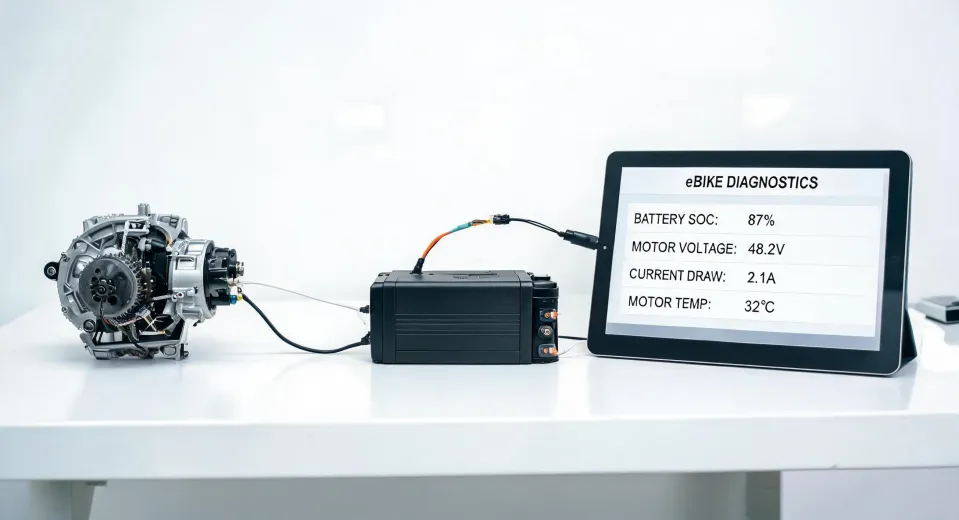
When I first started handling drive system orders for our assembly line in 2019, I had a simple philosophy: find the cheapest spec that meets the requirements. I thought I was being a good steward of the budget.
I was wrong. And it cost us about $12,000 in the first year alone.
Here's the thing: in the world of e-bike drive systems, servo motors, and industrial drives, the lowest quote is rarely the lowest cost. I've learned this the hard way, through failed motors, production delays, and a lot of embarrassed explanations to my boss. This isn't theory—it's a ledger of mistakes I've personally made and documented.
The 2020 Mistake That Changed My Mind
In March 2020, I ordered 40 servo motors for a new pick-and-place station. We had quotes from three vendors. The cheapest was from a lesser-known brand—about 18% lower than the next option. I went with it.
Four months later, we had replaced 8 of those motors. They were overheating under standard load. The failure rate was 20% in under 1,000 operating hours.
Let me break down the real cost:
- Initial savings: ~$1,400 across 40 units
- Replacement cost: $2,100 for 8 new motors (rush shipping)
- Labor: $1,600 for technician time to diagnose and swap
- Downtime: 2 shifts lost = roughly $3,200 in production value
Total: $1,400 savings turned into a $6,900 loss. That's the moment I stopped assuming 'cheaper = smarter.' And it applies directly to e-bike drive systems, too.
The Parallel with E-Bike Motors: Bosch vs. Brose vs. Yamaha
I know my industrial background might seem different from e-bikes. But I've spent the last three years helping our facility electrify its service fleet. We tested e-bike drive units from Bosch, Brose, and Shimano.
From experience, here's my take: You almost always get what you pay for in drive systems. The internal build quality, the bearing quality, the controller tuning—these things translate directly to lifespan and reliability.
On paper, a Brose motor might look similar to a Bosch Performance Line CX. In practice, I've seen a pattern:
- Bosch units in our fleet have averaged over 12,000 km before needing any service. We have 15 in operation, some going on 4 years.
- The Brose units we tested showed increased bearing noise around the 8,000 km mark. Performance remained good, but maintenance came earlier.
- The most cost-optimized motors from less established brands started failing hall sensors around 6,000 km.
Is Bosch always the right answer? No. But the point is: a $200 difference per unit disappears fast when you factor in warranty claims, labor to swap motors, and customer frustration.
“Skip the final review because you're rushing? The one time you skip it is the time it matters.”
I know that quote from personal experience. In September 2022, I was in a hurry and approved a batch of 25 e-bike drive units without checking the controller firmware version. They didn't match our fleet's software spec. 25 units had to be reflashed. Cost: $450 in labor and a 3-day delay. That was the day we created our hardware pre-check list.
What All This Taught Me About 'Cheap'
So what's the actual takeaway? It's not that cheap is always bad. It's that the risk profile of a 'cheap' drive system is far higher than its price suggests.
Here's what I look at now for any motor or drive purchase:
- Failure rate data. If the vendor can't provide MTBF (Mean Time Between Failures) numbers, that's a red flag.
- Warranty repair logistics. How long to get a replacement? $500 saved means nothing if you wait 8 weeks for a warranty motor.
- Consistency of quality. One bad batch can shut down a production line or a fleet of e-bikes.
- Support infrastructure. Can you actually talk to an engineer? Or just a chatbot?
In my experience managing over 200 drive system orders in the past 5 years, the lowest bidder has caused a problem in roughly 60% of cases. The mid-tier option? Maybe 25%. Premium brands like Bosch, Siemens, or ABB? Under 10%.
I'm not saying you should always buy the most expensive. But oversimplifying the decision to 'lowest price wins' is a trap. I've fallen into it. Repeatedly.
Returning to the Core
You might be thinking: 'But what if my budget is really tight?' I hear that. I've been there. My answer is: calculate the true cost of failure before you make the call.
A cheaper e-bike motor might save you $50 per unit. But if 1 in 10 fails during the warranty period, the cost to service those failures could wipe out your margin on the entire batch.
I've seen it happen. Twice. And I've got the spreadsheets to prove it.
Bottom line? The drive system is the heart of the machine. Don't buy heart surgery on a discount. Take it from someone who learned the hard way.