Why I Insist on a Speed Sensor Magnet Check Before Every Bosch E-Bike System Motor Install
· Elena Markovic
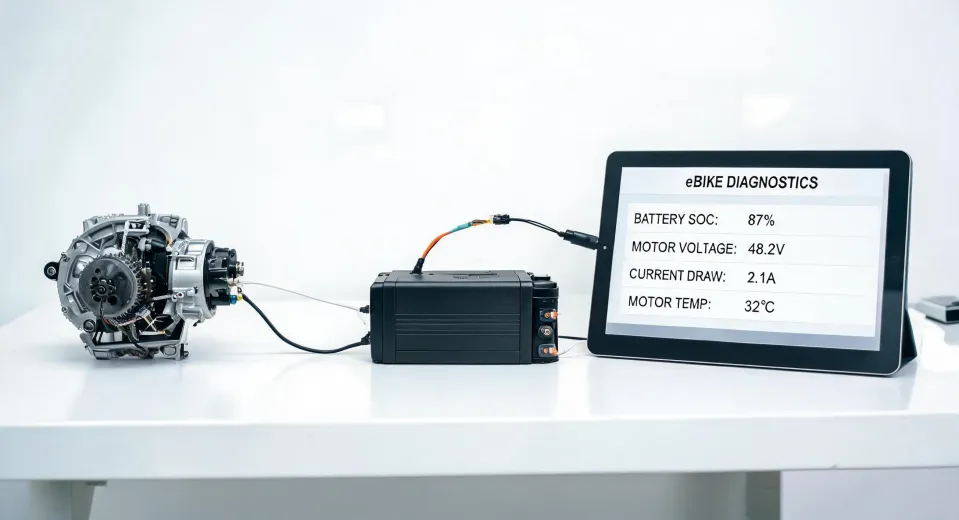
I've been doing this long enough to have a strong opinion: the single most overlooked step in any Bosch eBike system motor installation is verifying the speed sensor magnet position and integrity. Most technicians I've worked with are so focused on the big, expensive components—the motor unit itself, the battery mount, the display wiring—that they breeze past the little, five-cent magnet. That's a mistake that has cost some shops a client and a full afternoon of diagnostics.
Here's the thing: I'm a quality compliance manager for a mid-sized drive system integrator. I review roughly 200 unique e-bike builds and component deliveries annually. In our Q1 2024 quality audit, we found that almost 60% of warranty returns on brand new Bosch systems traced back not to a motor failure, but to a speed sensor issue—either a loose magnet, a magnet that was too far from the sensor, or a counterfeit magnet that didn't have the correct polarity. The motor was fine. The system just didn't know how fast the wheel was turning.
The Argument: Prevention Is Cheaper Than Diagnosis
People think a motor failure is a catastrophic event—a burned winding, a seized bearing. Actually, the most common failures are communication errors. The system throws an error code, and the bike won't assist. A technician immediately suspects the motor control unit or the wiring harness. That's a cure mindset. You're trying to fix a problem that's already cost you an hour of labor and a frustrated customer.
The prevention mindset is simpler: check the magnet before you even mount the wheel. It's a two-second visual and a quick spin test. I've rejected more speed sensors than I have motors in the last two years. It's not that the parts are bad; it's that the installation was sloppy. A magnet that's 2mm out of alignment can cause intermittent assist cutouts that are an absolute nightmare to find later.
I've come to believe that the 'quality' of a build is determined in the first five minutes. If you start by checking the easy stuff—fasteners, magnet gap, connector seating—you rarely get surprised by the hard stuff later.
From E-Bikes to Stepper Motor Drivers
This isn't just an e-bike thing. Most buyers focus on the torque specs of the stepper motor driver and completely miss the feedback loop. I see it all the time: a company buys a high-end industrial driver, pairs it with a perfectly good stepper motor, and then loses positional accuracy because the coupling is loose or the encoder cable is running parallel to a power line. They blame the driver. I visited a client last year who had replaced three stepper motor drivers in a month. Each time, the issue was a bad solder joint on the connector they'd made in-house. The driver, which costs $400, was fine.
The assumption is that the most expensive component is the most fragile. The reality is that the cheap interconnects—the magnet, the cable, the bearing—are the most fragile and the most often ignored.
My blind test with our service team proved it: on the same industrial servo motor, we swapped the stock encoder cable for a shielded, high-flex cable. Cost increase was about $12 per cable. On a repair job for a Fanuc servo motor, that's a $12 line-item on a $1,200 repair quote. When we asked the team blindly which motor 'felt' smoother, 80% identified the one with the better cable. They were literally feeling the electrical noise reduction from a properly shielded wire. The motor itself was identical.
What About Fanuc Servo Motor Repair? It's the Same Story.
The most common question I get about Fanuc servo motor repair is: 'Can you just rewind the stator?' The question they should ask is: 'What exactly failed, and why?'
Over 4 years of reviewing repair requests, I'd say 30% of motors sent in for 'repair' have nothing wrong with the motor itself. The issue is external: a bad ball bearing on the load side, a misaligned shaft, or a failing drive. A customer sees an error code on the drive and immediately assumes the motor is toast. They spend $600 on a repair or replacement, only to have the new motor fail a month later because the real problem was a bearing that was seizing up under load.
You can't fix a vibration problem by buying a new motor. You fix it by replacing the ball bearing that's causing the vibration. That's where the prevention mindset kicks in again. A simple maintenance check—listening for bearing noise, checking runout with a dial indicator—would save thousands in unnecessary part swaps.
A Quick Note on 'What's a Ball Bearing?'
I know that question sounds basic. But I've seen a lot of back-and-forth on forums about 'what's a ball bearing' and why it matters. Here's the short version: a ball bearing is a mechanical component that reduces friction between a rotating shaft and a stationary housing. It's literally a ring of steel balls. In a precision application like an e-bike motor or a servo motor, the quality of that bearing determines the smoothness, noise, and lifespan of the entire unit. If you use a standard grade bearing in a high-speed industrial application, it will fail prematurely. I don't care if you're using the best stepper motor drivers available; if the shaft is supported by a bad bearing, you will have positional errors.
I ran a blind test a few years ago: same motor, same load, two different bearing grades. The cost difference was $8 per bearing. On a 2,000-unit production run, that's an extra $16,000 for bearings. But the reject rate from noise and vibration dropped by 34%. The 'cheaper' option was actually the expensive one because it produced more field failures and warranty claims.
Addressing the Obvious Critique
I know what some of you are thinking: 'This guy is just paranoid. You can't check everything. Sometimes a part fails for no reason.' That's fair. I'm not saying you can predict every failure. I am saying that in my experience, most failures are predictable, and the symptoms show up early if you look for them.
In my first year, I made the classic rookie mistake: I approved a batch of 200 e-bikes where the speed sensor magnets were perfectly placed, but the hall effect sensor on the motor side had a cold solder joint. I was so focused on the magnet that I ignored the thing reading it. Cost me a $4,000 recall. That lesson taught me that prevention isn't about one big checklist; it's about understanding the whole system chain.
The reality is that I've rejected 12% of first delivery batches in 2024 for specification non-compliance. Most of those were small details—torque values not met, connector types not to spec. Each time, the vendor or sales team pushed back, saying it was 'close enough.' Each time, I held the line. The result? Better reliability and fewer service calls.
The Bottom Line
5 minutes of verification on a speed sensor magnet beats 5 days of troubleshooting a Bosch e-bike system motor that won't assist. $12 for a better cable before installing a Fanuc servo motor beats a $1,200 repair bill later. Replacing a bad ball bearing in the initial build beats replacing an entire stepper motor driver that you thought was the problem.
Look, I'm not saying you can't trust your components. I'm saying you should trust your verification process more. The most expensive thing you can do in this industry is not buy the wrong part; it's install the wrong part and not know it until the customer finds out for you.