The Spec Sheet Was Perfect. The Integration Still Failed.
· Meera Iyer
Every motor integration failure I've handled started the same way: a datasheet that checked every box. Torque, speed, voltage, current — all matched. Then the first prototype ran for 40 minutes and something started smelling like hot varnish.
I'm a buyer and integration engineer who has handled motor and drive orders for eight years. I've personally made (and documented) six significant mistakes, totaling roughly $14,000 in wasted budget. Now I keep the team's pre-check list so nobody repeats them.
Here's the thing I didn't understand in my first year (2017): you're not buying a motor. You're buying an interface.
The Problem You Think You Have: Parameter Matching
Most engineers treat motor selection like a matching game. Find the load torque, add a safety factor, pick the frame size, verify the voltage, order. If the numbers fit, the motor works. Simple.
That's the surface problem. And it's usually wrong.
In 2017, I ordered a batch of brushless motors to pair with a VFD on a conveyor retrofit. The motors matched the VFD's power rating and voltage exactly. Within a week, we burned through two motors and one drive. The issue wasn't torque or current — it was the PWM waveform from the VFD stressing the motor's insulation.
"NEMA MG 1 Part 30 and Part 31 define how motors should be rated for variable-frequency drive applications, including insulation stress and derating. IEC 60034-25 covers similar territory for converter-fed AC motors."
Neither spec guarantees a motor will work with a given VFD. They just tell you what questions to ask. We didn't know to ask them.
The Deeper Problem: You're Selecting a Component, Not a System
The real issue is that motor datasheets describe a component in isolation. Integration happens in the gaps between the motor, the drive, the controller, the mechanical load, and the environment. That's where mistakes hide.
VFD compatibility isn't a checkbox
"What motors are compatible with VFD?" is one of the most searched integration questions, and the honest answer is: fewer than you'd think without checking. Modern VFDs can drive permanent magnet synchronous motors, but not all BLDC or servo motors tolerate the PWM output well. Insulation class, bearing current, low-speed cooling, and encoder requirements all become variables. Ask the manufacturer — whether it's a servo motor manufacturer or any other drive supplier — for VFD-specific guidance. If they hesitate, that's your answer.
Closed loop stepper ≠ servo
A closed loop stepper motor solves the open-loop stepper's worst problem — step loss under load — but it doesn't become a servo. Overload capacity, high-speed torque retention, and dynamic response are still different. Every spreadsheet said the closed loop stepper was the right call: 30% cheaper, same holding torque, and it dealt with step loss. My gut said something was off about the acceleration profile. We went with the stepper anyway. The line ran rough for a month before we swapped to a servo. The lesson wasn't "never use steppers" — it was "check the load curve, not just the holding torque." (At least, that's been my experience with mid-axis cartesian systems.)
Integration-heavy products: the e-MTB case
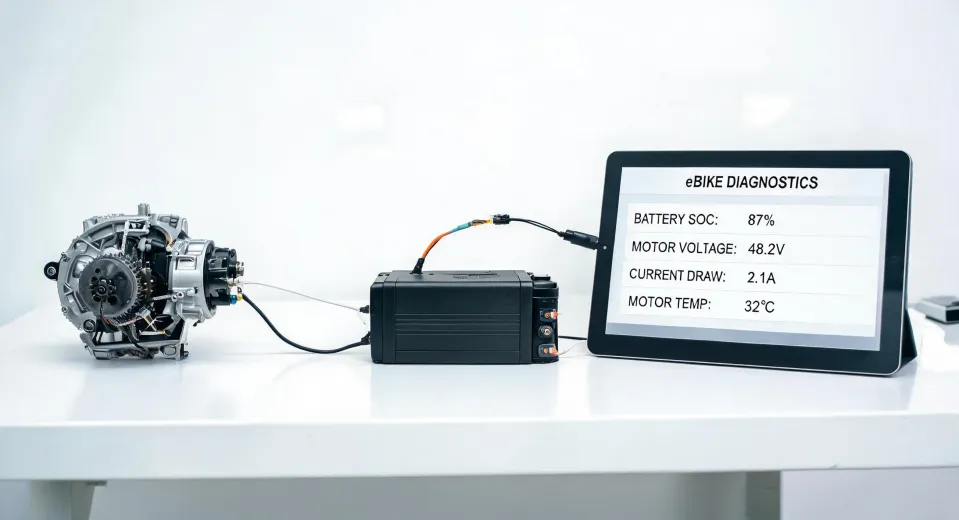
Lightweight e-MTB drives like maxon's Air S motor platform show the same pattern at a smaller scale. The motor isn't the system. Controller protocols, battery voltage windows, gearbox ratios, and frame tolerances all have to agree. In Q3 2022, our team built a prototype around a drive unit where the controller and motor weren't matched on firmware, and it took three weeks to find. That overran the frame rework by $3,200 and two weeks of schedule. That's 212 pieces, not 200 — every one needed rework.
Documentation has versions. Your internal spec sheet doesn't.
maxon's datasheets and controller documentation are genuinely detailed (thermal derating curves, compatibility matrices, interface pinouts). But they get revised. In Q1 2024, we submitted three rejections in a row because our internal drawing was using a pinout from a 2022 datasheet revision. Nothing was wrong with the motor. Our process was stale. Manufacturer news — including maxon motor news and datasheet revisions — is easy to miss. (This was as of early 2024. Verify current revisions before you cut a PO.)
What It Actually Costs
The $14,000 in my own history breaks down roughly like this: about $1,800 in burned drives and motors in 2017, $3,200 in e-MTB frame rework in 2022, and the rest in small reworks, expedited shipping, and engineering hours chasing compatibility issues that should have been caught in review.
The money is the easy part to count. The harder cost is schedule and credibility — the look on a project manager's face when the "verified" spec sheet turns out to be wrong. And the recurring cost of not building a process after the first failure: the second failure, and the third.
My experience is based on roughly 200 motor and drive orders, mostly in packaging machinery and light e-mobility. If you're working with high-volume automotive or medical devices, your tolerance for surprises is probably lower than mine — and your integration review should be tighter.
What I Do Now (Short Checklist)
Not a long list. The point is to stop treating motor selection as a standalone task.
- Define the drive or controller first, then the motor. The interface decides more than the motor does.
- Ask for VFD-specific documentation if a variable-frequency drive is involved. Check NEMA MG 1 Part 31 and IEC 60034-25 terminology with the manufacturer. If they can't answer in that language, pause.
- Evaluate closed loop steppers on the load curve, not on the label. They solve step loss, not dynamic performance.
- Lock datasheet revisions by date and re-check quarterly. Manufacturer news and documentation updates are easy to miss.
- Build a pre-check list after every failure. Ours has caught 47 potential errors in the past 18 months (as of January 2025, across roughly 200 orders).
I learned the hard way that the fundamentals don't change — the motor still has to match the load. But the execution has. Five years ago, "compatible" meant voltage and current. Now it means the whole loop. If you're still selecting motors by datasheet alone, you're one PWM waveform away from my 2017 invoice.