Why I Think We Overcomplicate Motor Specs (And What Actually Costs Us)
· Elena Markovic
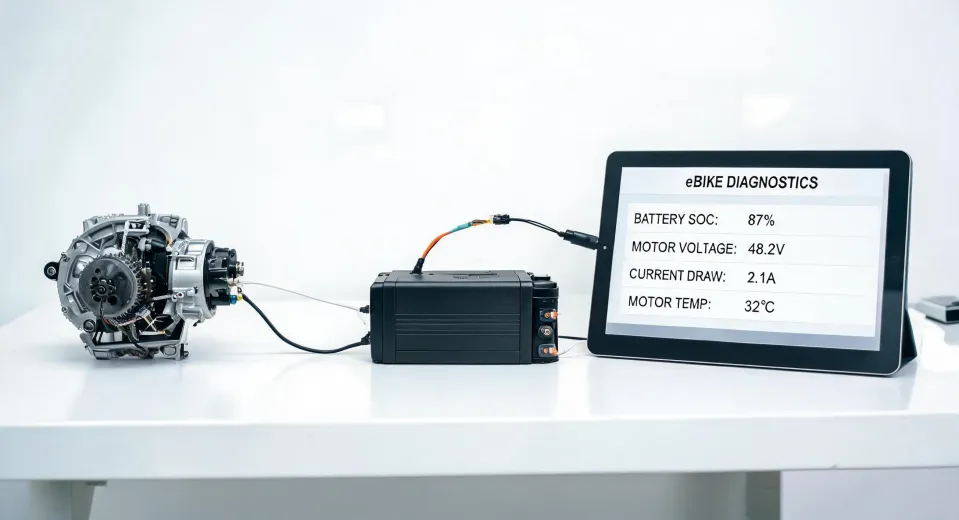
Most Buyers Get Motor Specs Wrong
Here's my take, and I know some engineers won't like it: We spend way too much time obsessing over peak torque and efficiency curves, and not nearly enough on how the system actually behaves under real load.
I manage procurement for a mid-sized automation integrator. We buy everything from 3 phase AC motors for conveyor lines to VFDs for precision speed control. Over six years of tracking invoices and field failures—about $180,000 in cumulative motor and drive spend—I've learned that the spec sheet is a lie. Not intentionally, but it misses the context that actually matters.
Argument 1: The 'Best' Specs Don't Predict Field Performance
It's tempting to think a motor with higher peak efficiency or a higher IP rating is automatically better. But that ignores how it'll actually run in your facility. The '95% efficient' motor only hits that at a specific load point. Run it at 60% load—which is common in variable speed applications—and you might be at 88%. That's a huge difference in operating cost over a year.
What most people don't realize is that 'continuous duty' ratings are tested under ideal lab conditions. Clean power, constant temperature, perfect mounting. Your factory floor isn't a lab. I've seen a motor that was 'rated for continuous 24/7 operation' fail after 14 months because of harmonic distortion from a cheap VFD. The motor wasn't the problem—the system design was.
Here's something vendors won't tell you: the efficiency class (IE3 vs IE4) matters less than the drive-motor pairing. We tested this in 2023. An IE4 motor with a mismatched VFD ran 2% less efficient than an IE3 motor with a properly tuned drive. That difference cost us about $800 annually in electricity for that one pump system.
Argument 2: Preventive Verification Costs Nothing Compared to Rework
I still kick myself for not insisting on a full system test before we installed 12 brushless DC motors on a packaging line we built in 2022. The motors were spec'd correctly on paper. But the control algorithm on the drive wasn't tuned for the load inertia. The result: the line kept overshooting position, causing jams. Three weeks of troubleshooting, two vendor site visits, one makeshift software patch. Total wasted cost: about $4,200 in downtime and labor.
The 15-minute load verification test I now require on every build would have caught that. That test costs us maybe $200 in technician time. 5 minutes of verification beats 5 days of correction.
I built a simple checklist after that incident: verify voltage harmonics at the drive input, run a load cycle at maximum and minimum speed, check temperature rise after 30 minutes of operation. That checklist has saved us an estimated $8,000 in potential rework over the past two years.
Argument 3: The 'Cheaper' Drive System Isn't—Not in TCO
I have mixed feelings about this because part of my job is to minimize upfront cost. On one hand, a lower-priced VFD can save $400 on a $1,200 budget line. On the other hand, I've tracked the failure rate. On our dehumidifier lines, we compared two VFD vendors over 18 months. The cheaper units had a 7% failure rate. The more expensive line—at 30% higher unit cost—had a 0.8% failure rate. Accounting for replacement labor and downtime, the 'cheaper' option cost us 15% more in total cost of ownership.
But what most people don't realize is that the failure wasn't due to component quality alone. It was because the cheaper VFD's control algorithm didn't handle the motor's low-speed torque ripple well. That caused excessive heating. The 'budget' drive wasn't bad. It was just mismatched to the application.
So now our procurement policy requires a technical compatibility review for any drive-motor combination under $5,000. It adds maybe 30 minutes to the process. But it's cut our drive-related field failures by about 60%.
Addressing the Obvious Objection
I know what some of you are thinking: 'We don't have time for all this verification. We have tight deadlines.' I get it. I've been there. But here's what I'd push back on: what's the cost of not verifying? One unplanned downtime event on a critical line can wipe out all the 'time saved' from skipping a 30-minute test. It's a bet I've lost twice—and I've decided I'm not betting the budget on it anymore.
Bottom Line
Don't rely on the spec sheet to make your motor or drive decision. The real cost—and the real performance—comes from how the system works together in your specific application. I've shifted from buying 'the best specs' to buying 'the best-matched system.' And that means spending more time upfront on verification, not less. It hasn't made my job easier. But it has made my budget more predictable, and our lines more reliable.