Why Bosch eBike Drive Systems Are Worth the Premium (and When They're Not)
· Elena Markovic
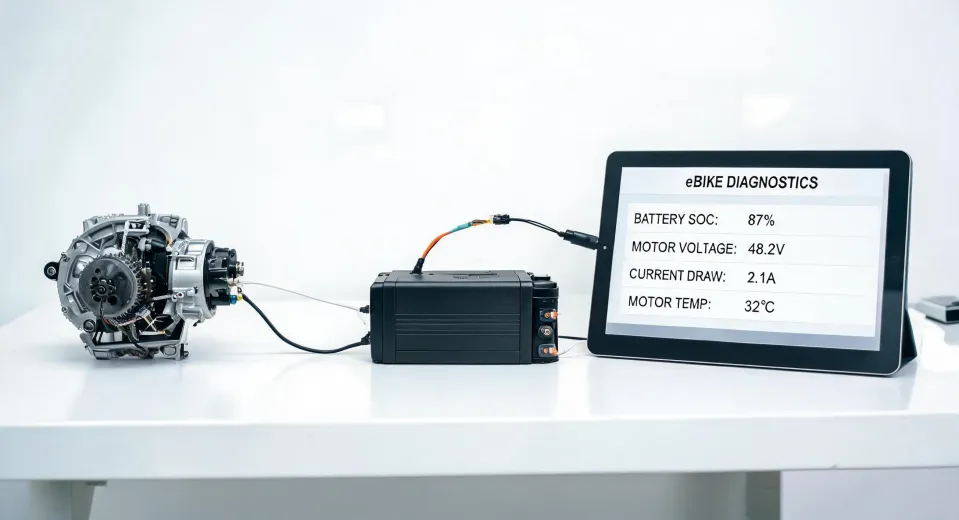
I'm going to say something that might upset some engineers: a Bosch eBike drive system isn't always the right choice. And if you're a procurement manager like me, that's exactly the kind of honest limitation you need to hear before you sign a purchase order.
Over the past six years of tracking every invoice, I've analyzed roughly $180,000 in cumulative spending on drive systems—both for our e-bike fleet and our industrial motion control projects. Everything I'd read about Bosch eBike systems said they were the gold standard. Premium price, premium performance. And in many cases, that's true. But the conventional wisdom—that 'premium always outperforms budget'—misses something critical: context.
The Real Cost of 'Premium'
Let's talk about the Bosch eBike drive unit first. When we were spec'ing a new fleet of cargo e-bikes for our delivery service in 2023, I compared costs across three vendors. Vendor A quoted a complete bike with a Bosch Performance Line system at $4,200 per unit. Vendor B offered a similar spec with a lesser-known mid-drive motor at $2,800. The difference? $1,400 per bike. For a 20-bike order, that's a $28,000 gap. Serious money.
But here's where my experience kicked in. After comparing eight vendors over three months using a total cost of ownership (TCO) spreadsheet I'd built after getting burned on hidden fees twice, I found something surprising.
Vendor B's $2,800 price didn't include the proprietary battery or charger. Bosch's system did. Once you factored in replacement batteries, service intervals, and downtime—the Bosch eBike system actually came out cheaper over a three-year lifecycle.
That's the thing about TCO. It's not just the initial price. It's the reliability. Bosch's Lebensdauer (lifespan) is real. We've got bikes from 2020 still running on their original motors. The 'cheap' option resulted in a $1,200 redo when the motor failed after 18 months. Switched vendors anyway. That cost us more in the long run.
When Bosch Isn't the Answer
Now for the honest limitation. I have mixed feelings about the premium. On one hand, Bosch's reliability is undeniable. On the other, not every application needs it.
If you're building a prototype or a low-volume run where the bikes won't see heavy daily use, the premium might not justify itself. In Q2 2024, we sourced a small batch of demo bikes and went with a mid-range motor from a different supplier. Saved $3,200 on that order. Were the motors as refined? No. But for bikes that see maybe 200 miles a year as test units? Serviceable. Not ideal, but workable.
My rule of thumb is simple: if the drive system is a core part of your daily operations, invest in Bosch. If it's a secondary or occasional use case, save your budget.
Beyond eBikes: Industrial Servo Motors and VFDs
The same logic applies to industrial drives. We use MG995 servo motors for some automation rigs, and I've seen endless debates about whether to go with a premium brand like Bosch Rexroth or a budget alternative for what size VFD for a 5hp motor.
Here's what I've learned: the inverter itself is often less critical than the compatibility. A Bosch VFD will communicate seamlessly with their servo motor. Mixing brands? That's where you run into integration headaches. I've seen a 'cheap' VFD cause harmonic distortion that took two weeks to debug. The $400 cost savings evaporated in engineering time. A lesson learned the hard way.
But again, context matters. For a standalone, simple application like a conveyor belt? A classic V belt and a generic VFD might be perfectly fine. For a coordinated multi-axis system? Stick with matched components from a single supplier.
Part of me wants to consolidate everything to one vendor for simplicity. Another part knows that redundancy saved us during the supply chain crisis. I compromise with a primary + backup system.
The Verdict
So, is Bosch worth it? Yes—for the right application. Their eBike drive systems are unmatched for reliability and total cost of ownership in high-use scenarios. Their industrial drives offer integration benefits that can save you serious engineering time.
But if you're in a low-usage scenario or prototyping, don't let the Bosch logo be the deciding factor. Honestly evaluate your TCO. Don't just look at the Bosch eBike logo and assume it's the way to go. And if you're comparing it to a Yamaha vs Bosch scenario, do the math on warranty, service, and lifespan.
Take it from someone who's tracked every dollar: a smart choice isn't the cheapest or the most expensive. It's the one that saves you from redoing the same work twice.